Our Story
Three centuries of one family's vision. One extraordinary house.
The History
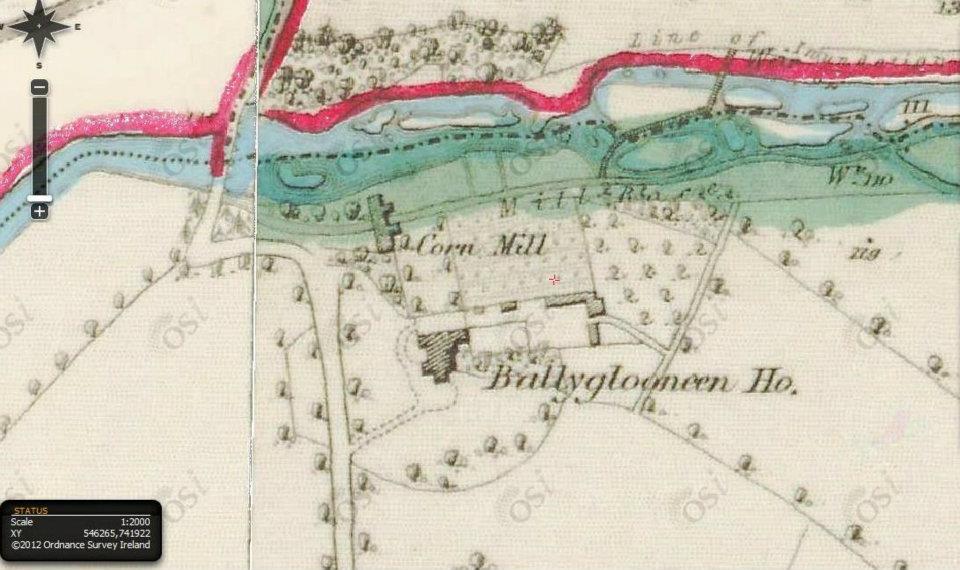
Ballyglunin Park traces its origins to the 1640s, when Martin Blake — high sheriff of Galway — was granted these lands by Charles II. The Blakes were prominent figures in Galway society, with an estate that once stretched across 10,500 acres, valued in The Great Landowners of Great Britain and Ireland at nearly £40,000 — the equivalent of almost £10,000,000 today.
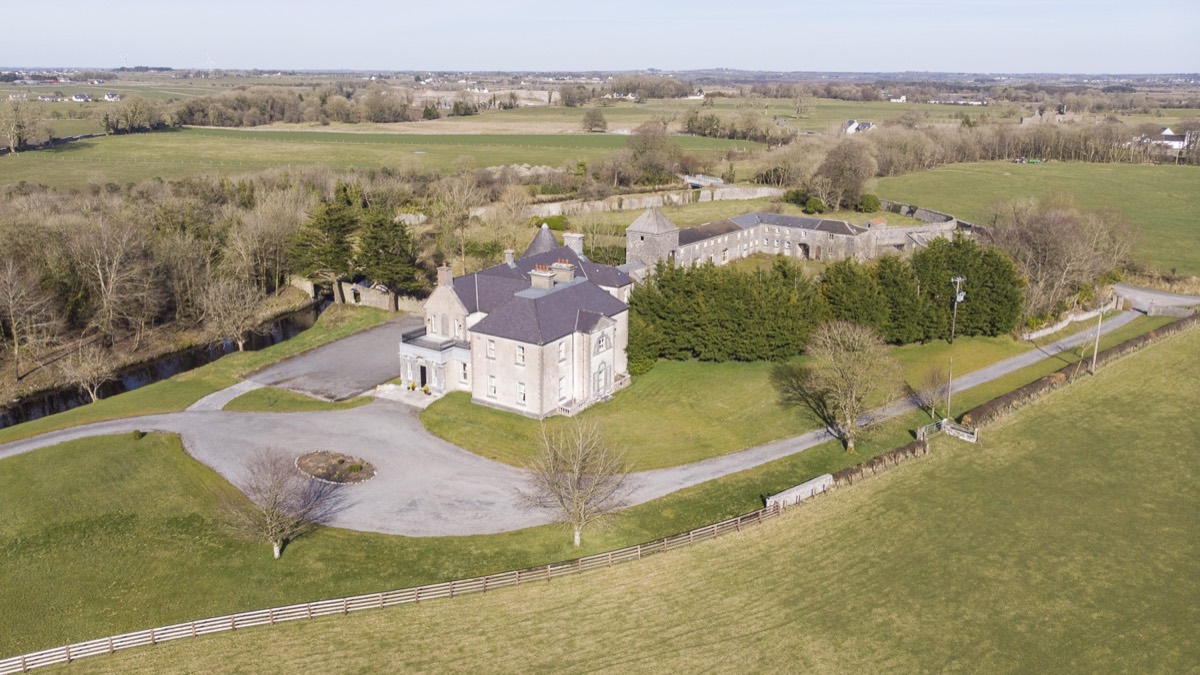
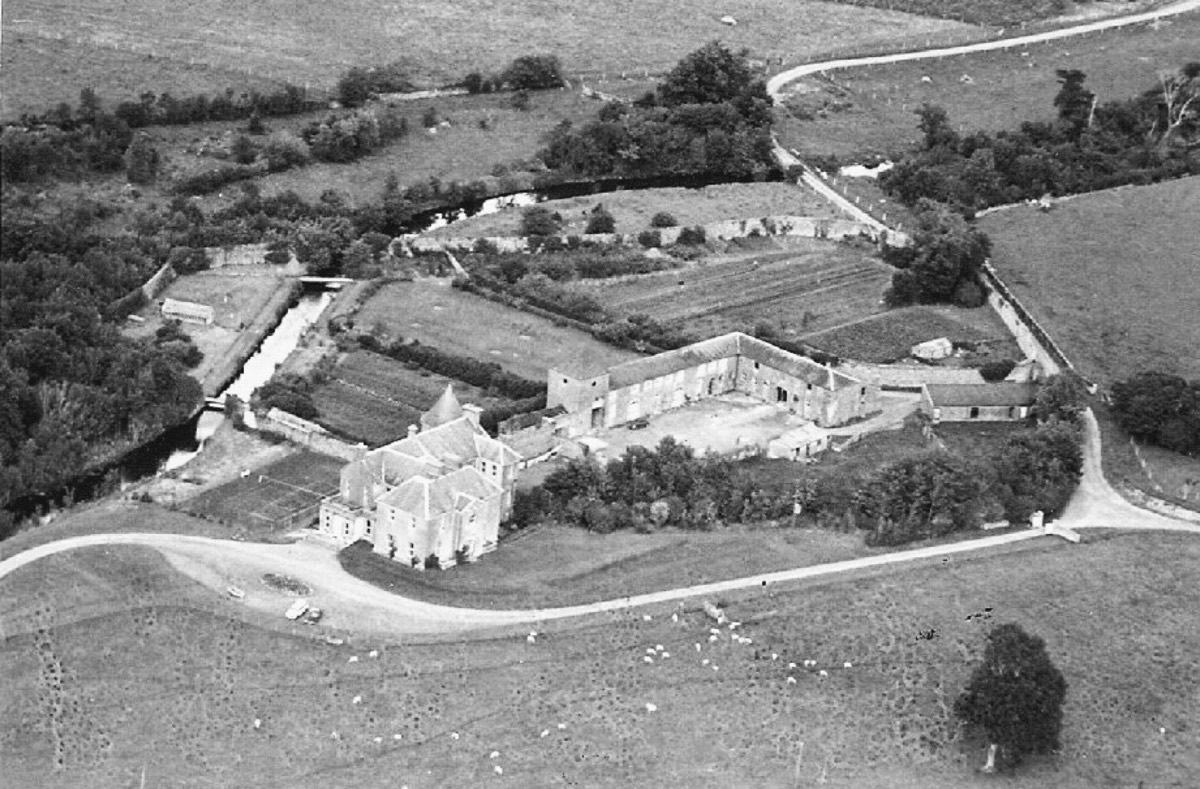
The Georgian manor house was built in 1730. The Victorian wing, castle towers, surrounding walls, and moat were added in the 1820s during what must have been a golden age for the family, a period when Martin Joseph Blake served as MP for Galway. Every generation left its mark on the house, and the layers of that history are visible today in every room.
Recent renovations uncovered evidence that a medieval castle or tower house once stood on or near the current site. The most striking proof is the stone facade of the entry hall, which features components of medieval Irish castle architecture believed to have been salvaged from that earlier structure. The large stone tower, built during the Victorian era, incorporates carved stone window casings from the same medieval source. And in the walled garden, a carved stone crest has been dated to the 14th century — the oldest feature on the estate.
In 1970, the Land Commission divided much of the original acreage among local farmers. Today, Ballyglunin Park encompasses 33 acres of pasture, gardens, and forest — intimate enough to feel like home, vast enough to explore for days.
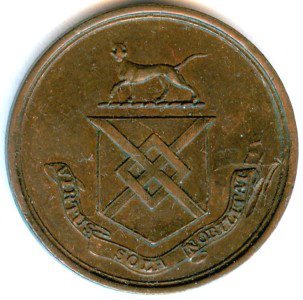
Blake Estate Coin
A coin minted during the working estate era under Martin Blake — a tangible relic of the family’s influence in 18th-century Galway.
The Quiet Man at Ballyglunin
“Well now, I’ll begin at the beginning. A fine soft day in the spring it was, when the train pulled into Castletown, three hours late as usual, and himself got off.”
Those words opened John Ford’s 1952 masterpiece The Quiet Man, and the station platform where John Wayne first set foot in Ireland was Ballyglunin — right here, on what was once Blake estate land.
The Ballyglunin Railway Station was built in the 1860s at the behest of Martin Joseph Blake, who used his influence as MP to reroute the Great Western Railway through his estate rather than the originally planned path through Monivea. For more than a century, the station connected Ballyglunin to Tuam, Athenry, Galway, and beyond. Grain, beet, and livestock moved through its platforms. Legend has it that at the turn of the 20th century, Robert Blake would have his dinner delivered by rail all the way from Dublin.
When film crews arrived in 1952, the estate and its station became the fictional village of Castletown. Maureen O’Hara and John Wayne spent days filming on the property. The station’s platform, the surrounding fields, and the gentle light of the West of Ireland became part of cinema history. The surrounding fields, the river, and the rolling pastures of the Blake estate all appeared on screen — making Ballyglunin Park itself a part of cinema history, not just the station.
The rail line closed in 1976 and the station fell into disrepair. But beginning in 2004, a dedicated group of local volunteers launched the Ballyglunin Railway Restoration Project. Today, the station has been beautifully restored as a heritage site, visitor centre, biodiversity park, and community hub. It hosts theatre performances, markets, and educational tours — and it is a short walk from the front door of Ballyglunin Park.
When you stay at Ballyglunin Park, you are staying on the estate where The Quiet Man was filmed. No other vacation rental in Ireland can offer that.
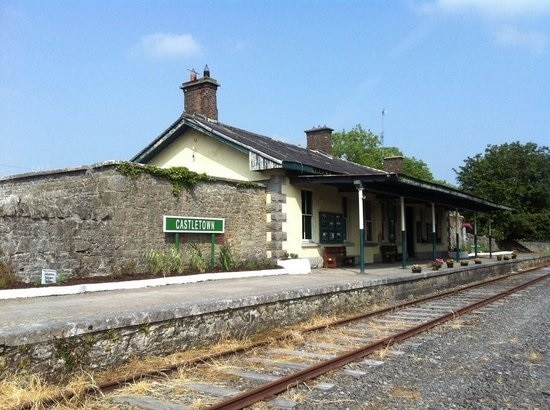
Ballyglunin Railway Station, restored
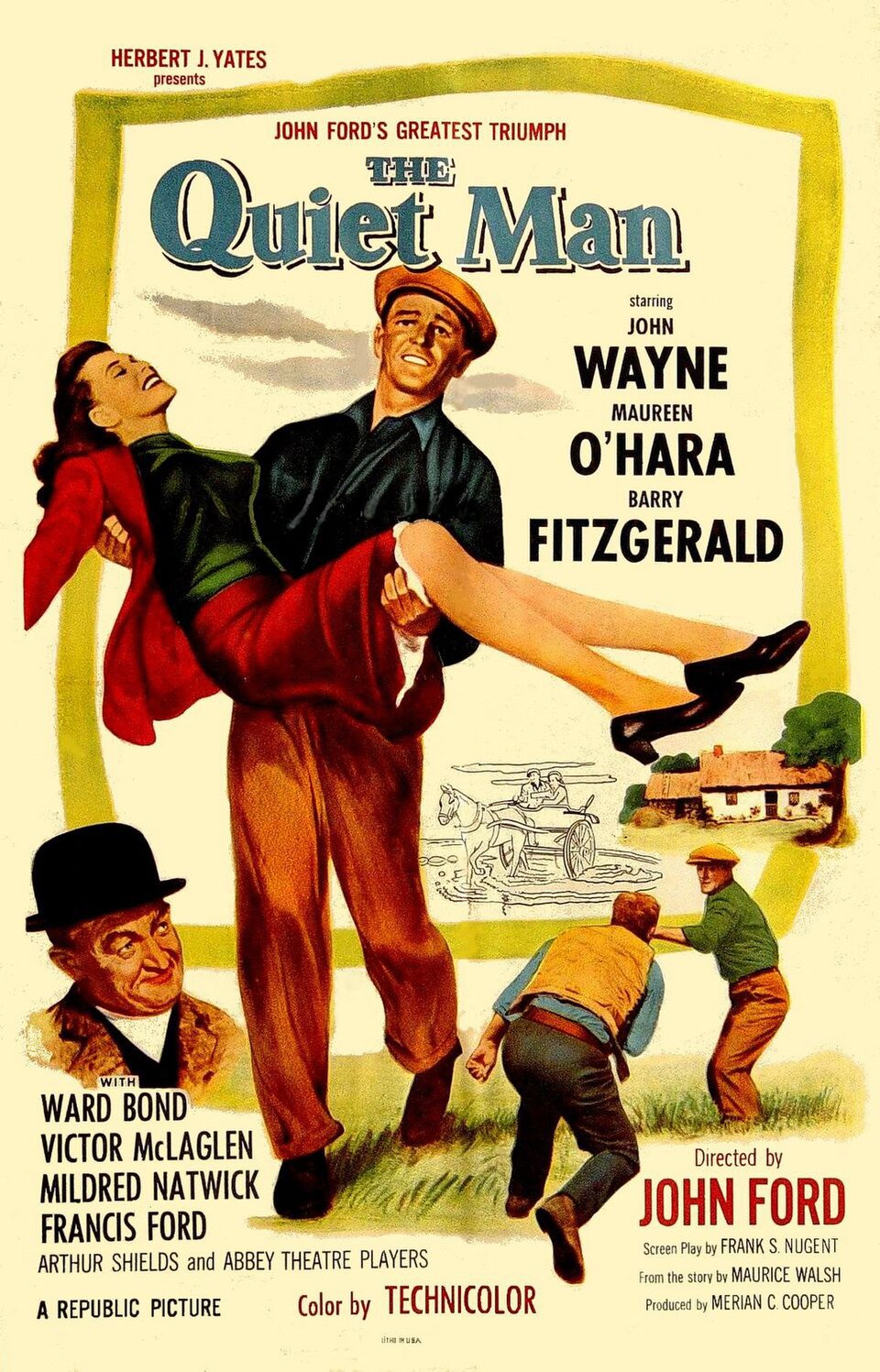
The Quiet Man, 1952
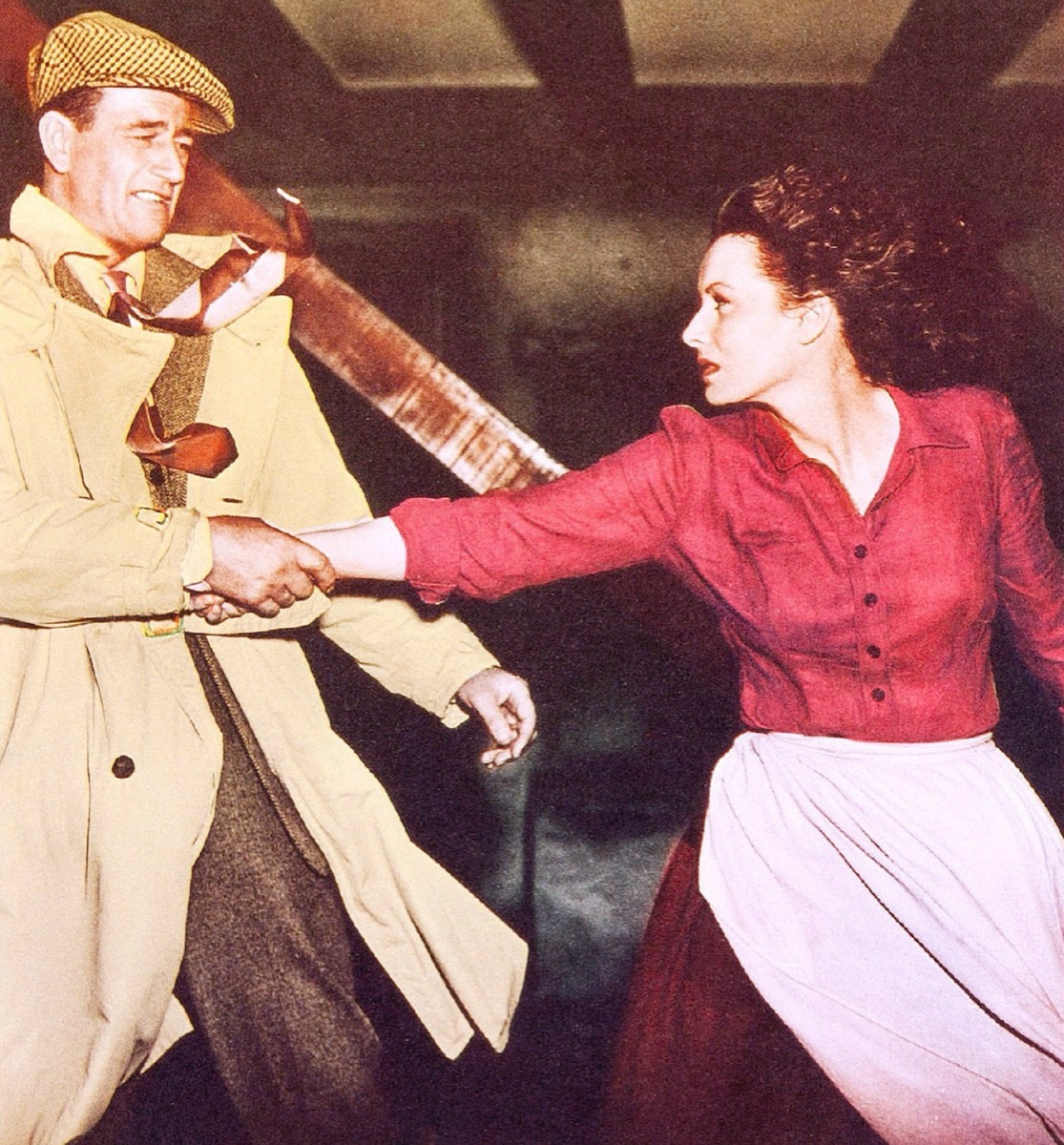
John Wayne and Maureen O’Hara at Ballyglunin
Visit ballyglunin.com to learn more about the station’s restoration.
The Restoration
Over three years, Ballyglunin Park was brought back to life with painstaking attention to both historical authenticity and modern comfort.
The original Georgian and Victorian architectural details were preserved and restored — rococo plasterwork, carved eagles above doorways, cornices of mutules, and 19th-century stenciled ceiling decorations. Where time had taken its toll, craftspeople worked to match the original artistry rather than replace it.
At the same time, the house was fully modernized. Every room has individual heating controls, built-in USB charging, and high-speed WiFi. The electrical and safety systems were completely replaced. Six en-suite bathrooms were designed to feel both contemporary and in keeping with the character of each wing. The Victorian tower was given particular attention: its ground floor now houses a library with direct access to the river and gardens, while the first floor bedroom offers panoramic views across the entire estate.
The result is a house that feels as it should — layered, lived-in, and deeply comfortable — while quietly providing every convenience you need.
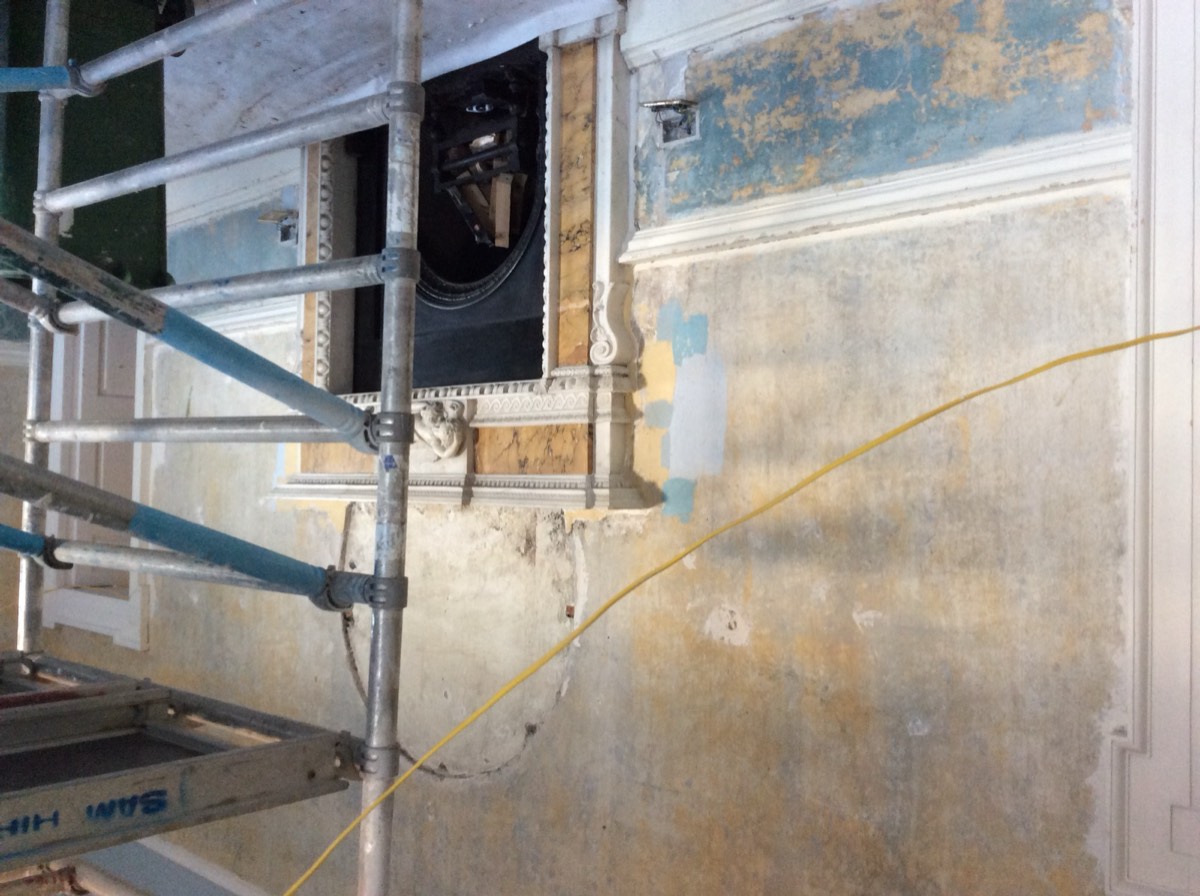
Restoring the original Victorian plasterwork
Before
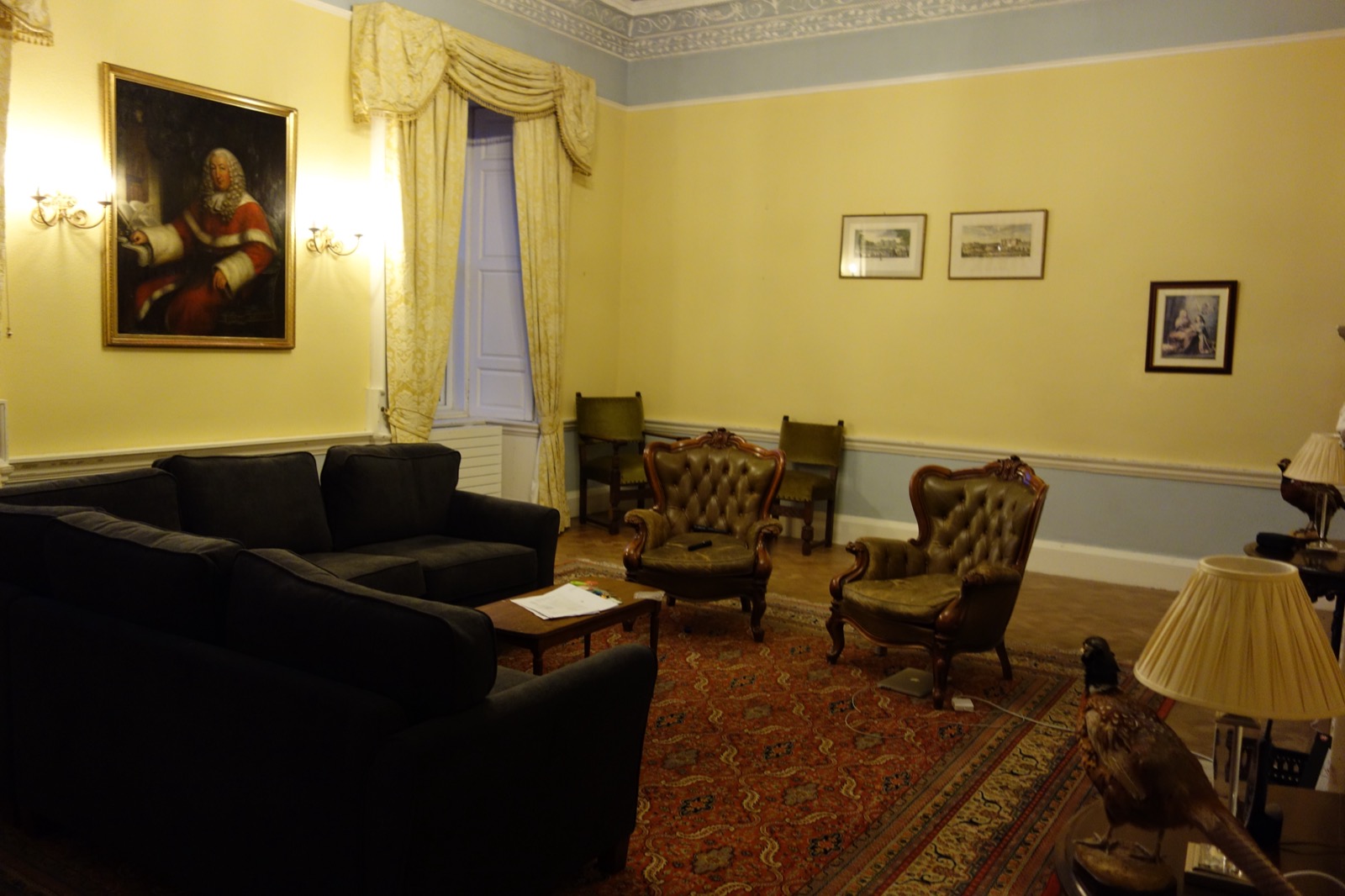
The drawing room before restoration
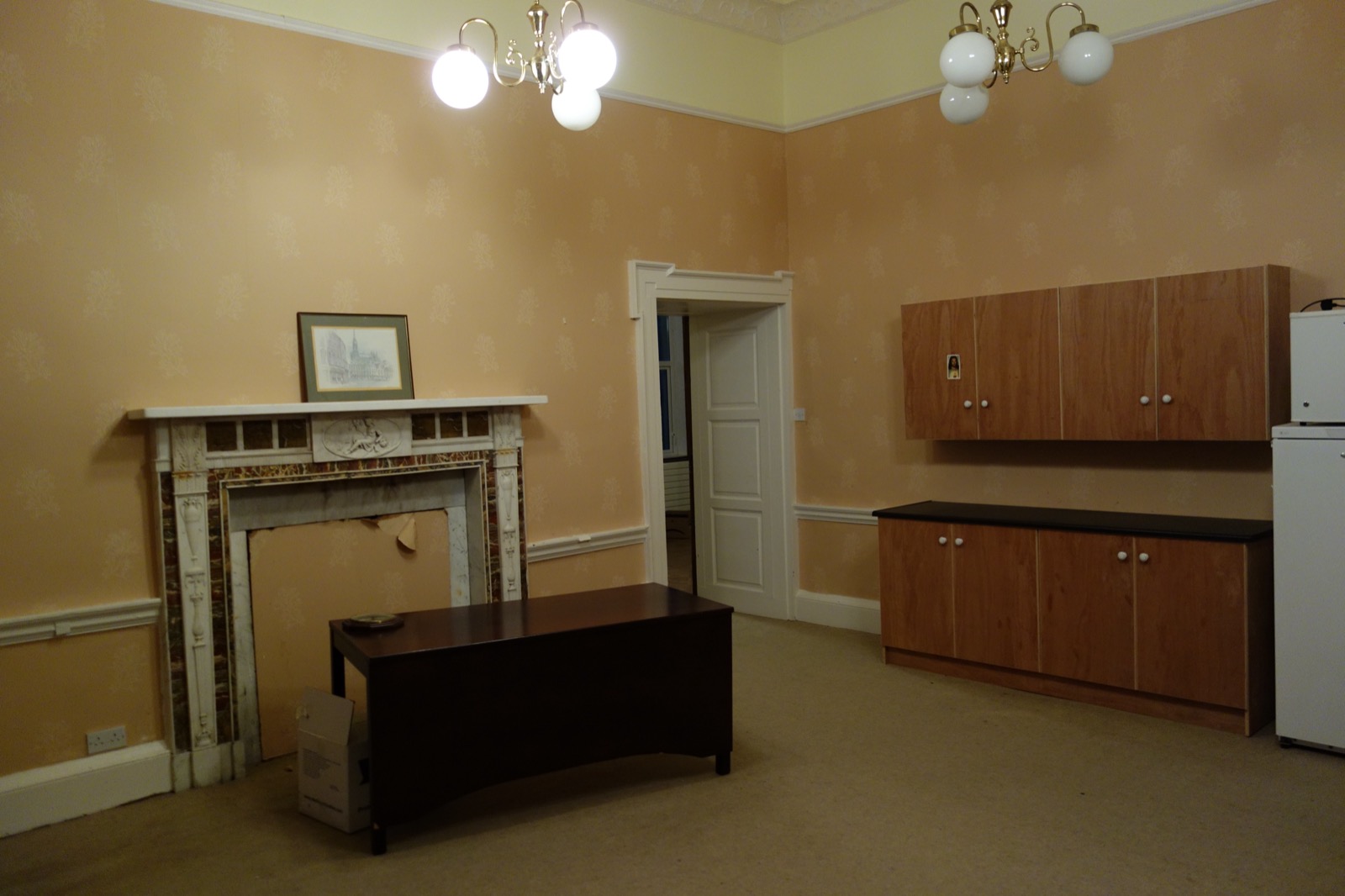
The library before restoration
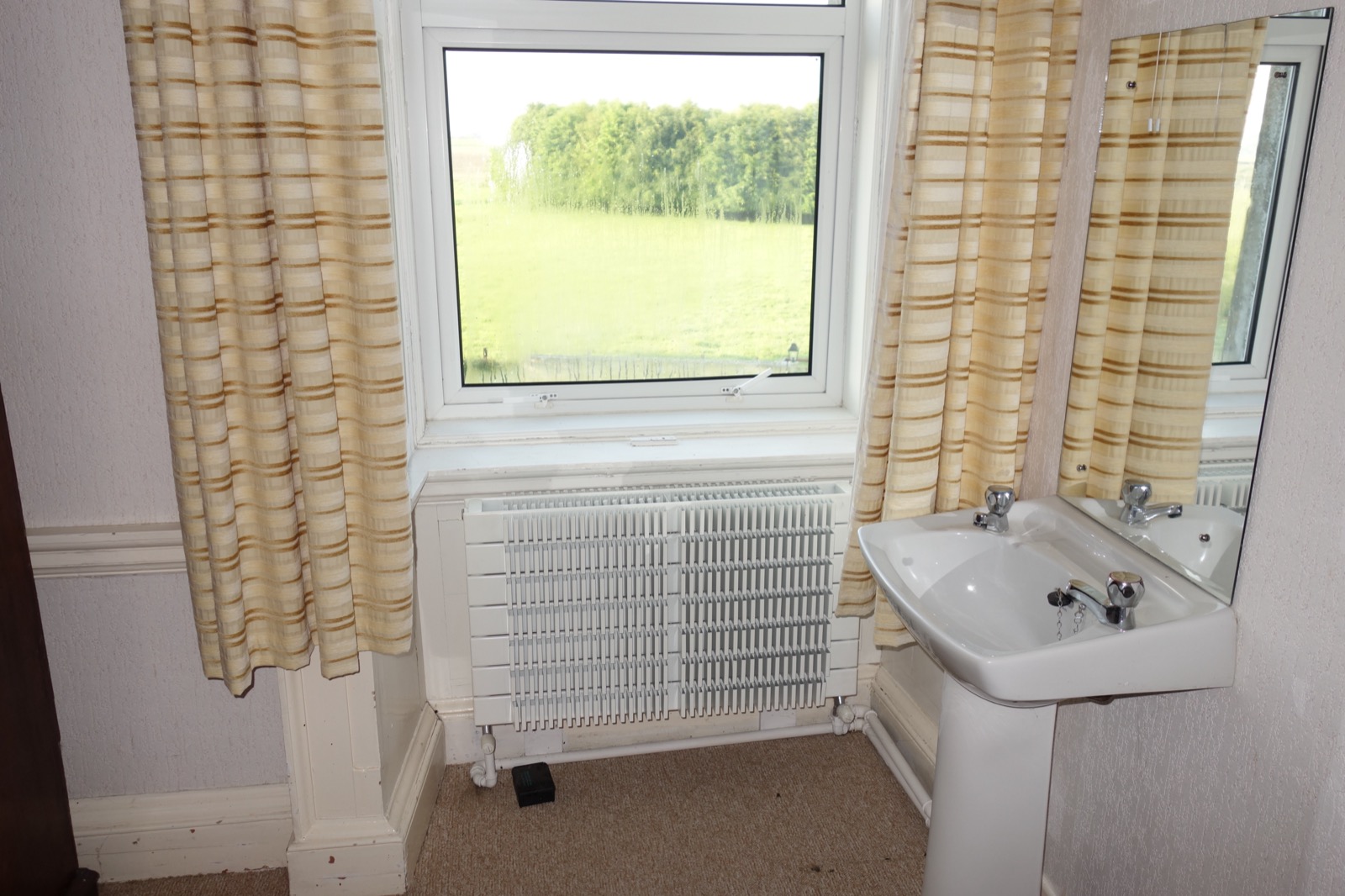
Original bathroom overlooking the pasture
During
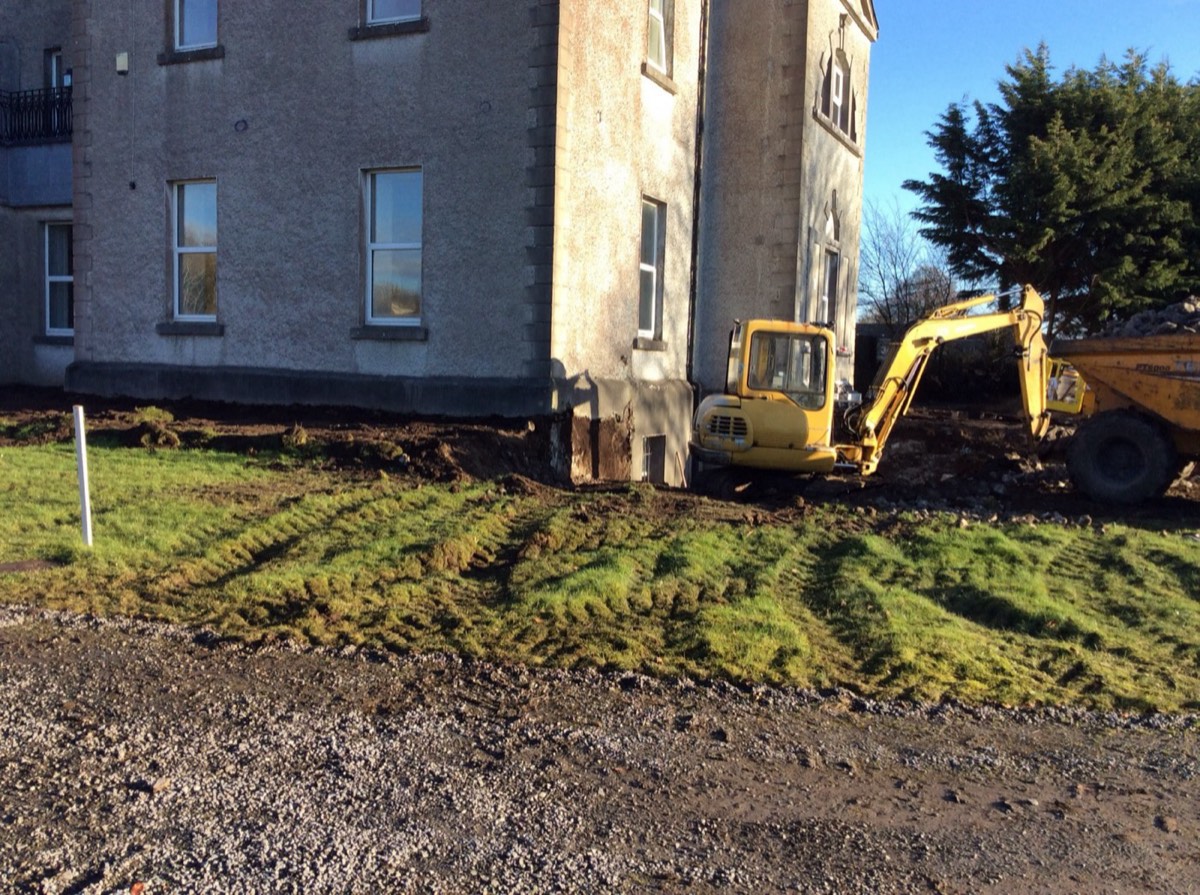
Exterior groundworks
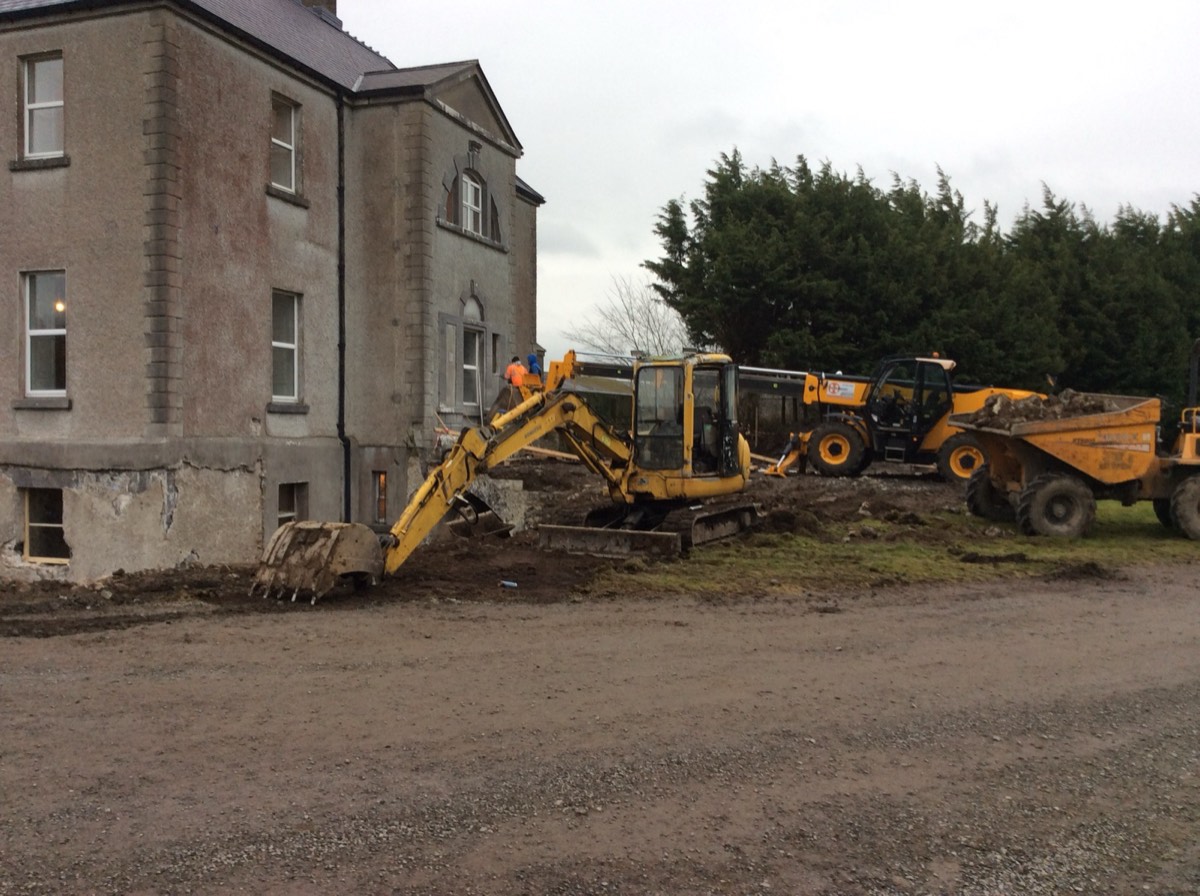
Foundation excavation
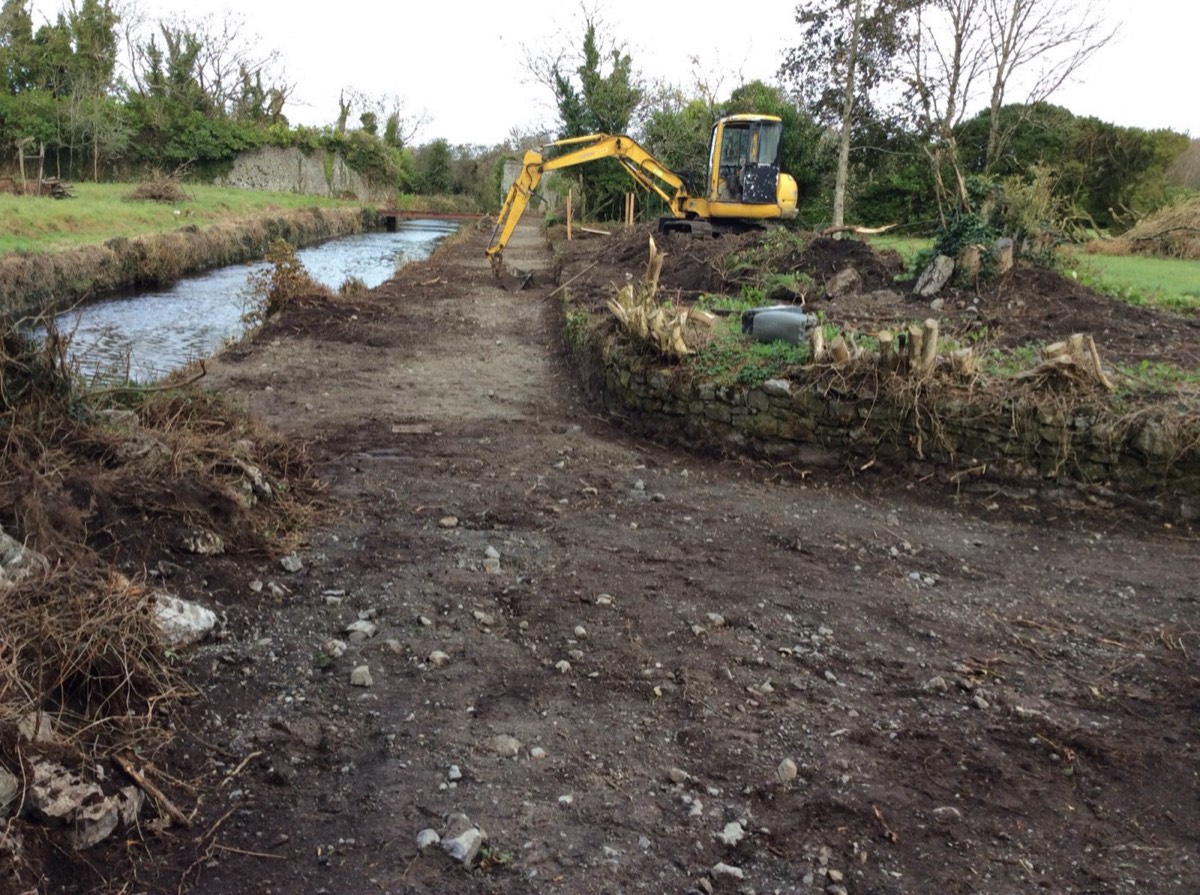
Grounds and river works
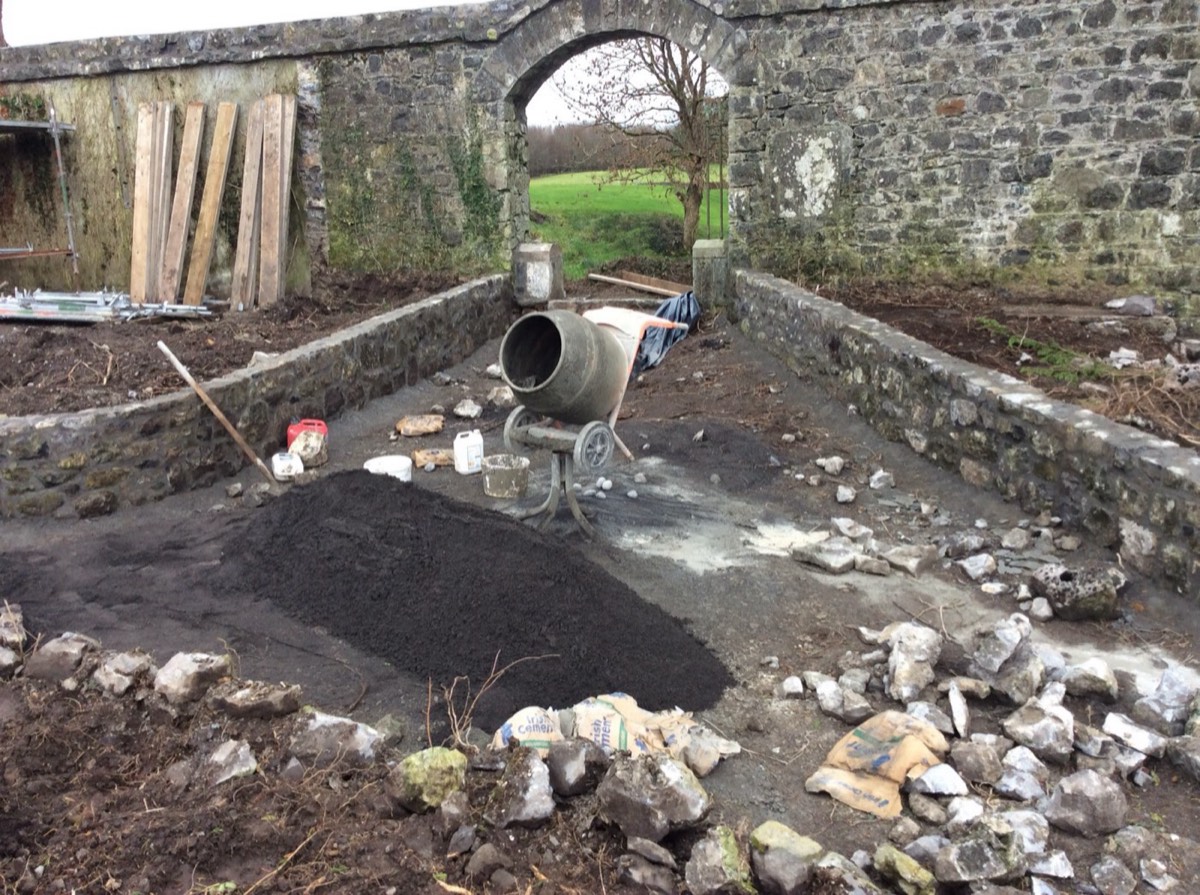
Stone arch excavation
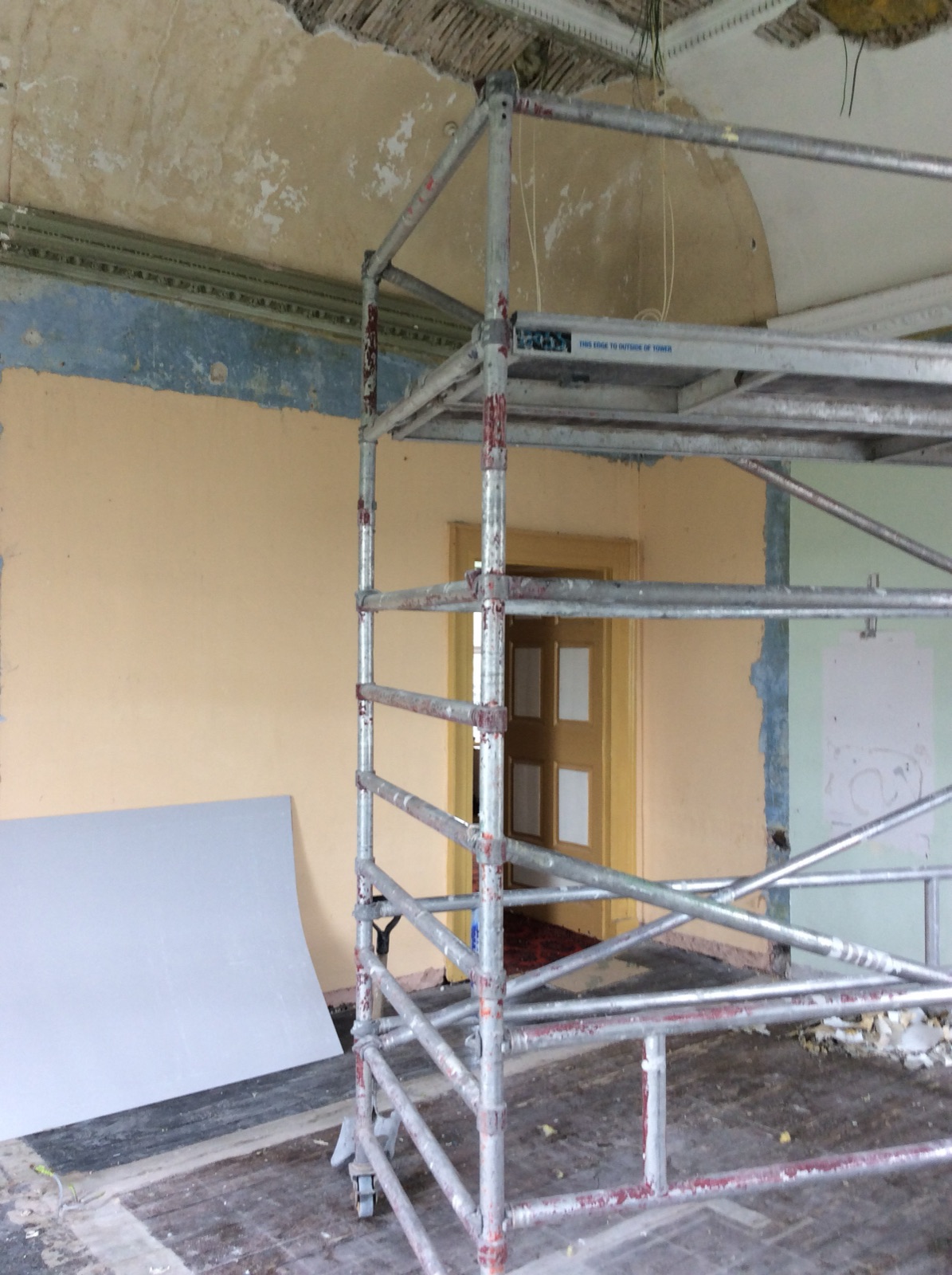
Upper floor landing during restoration
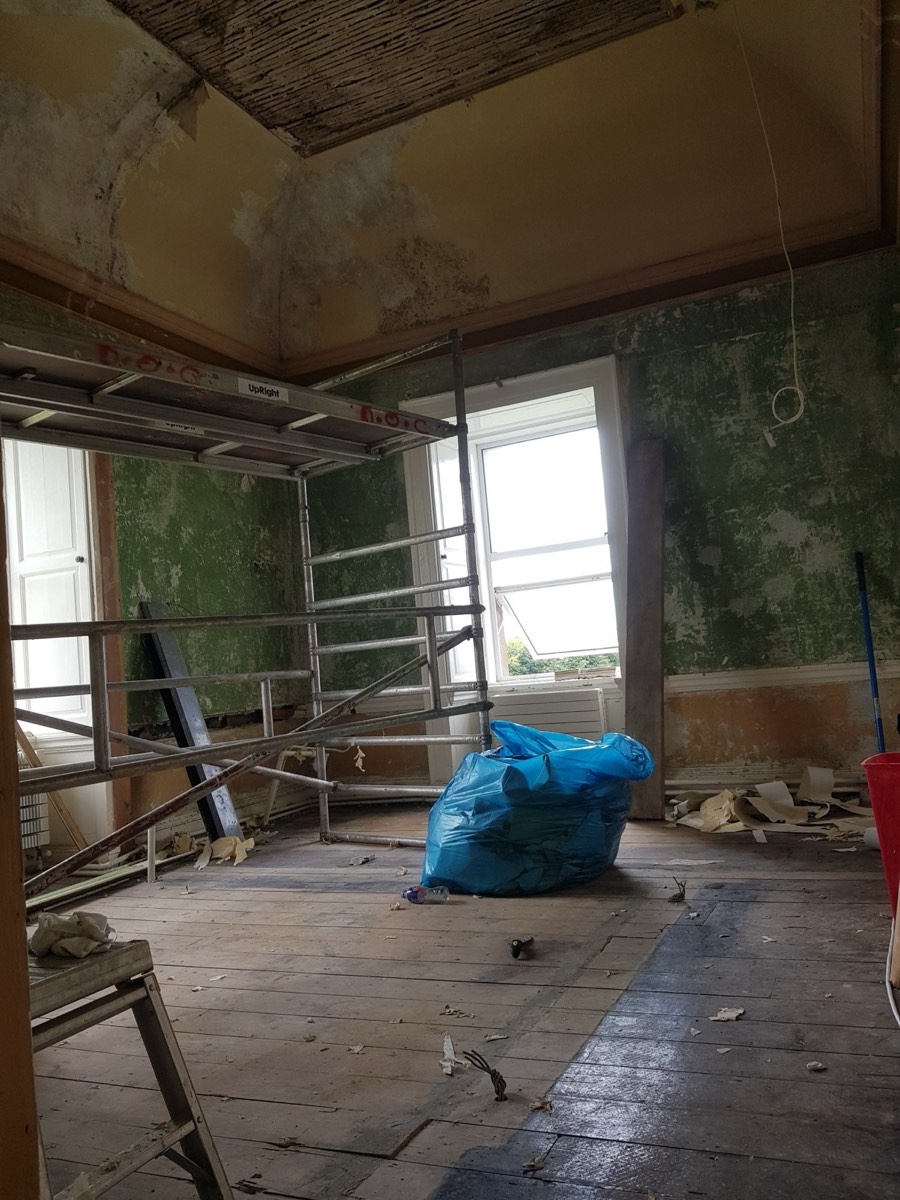
Interior stripped back for restoration
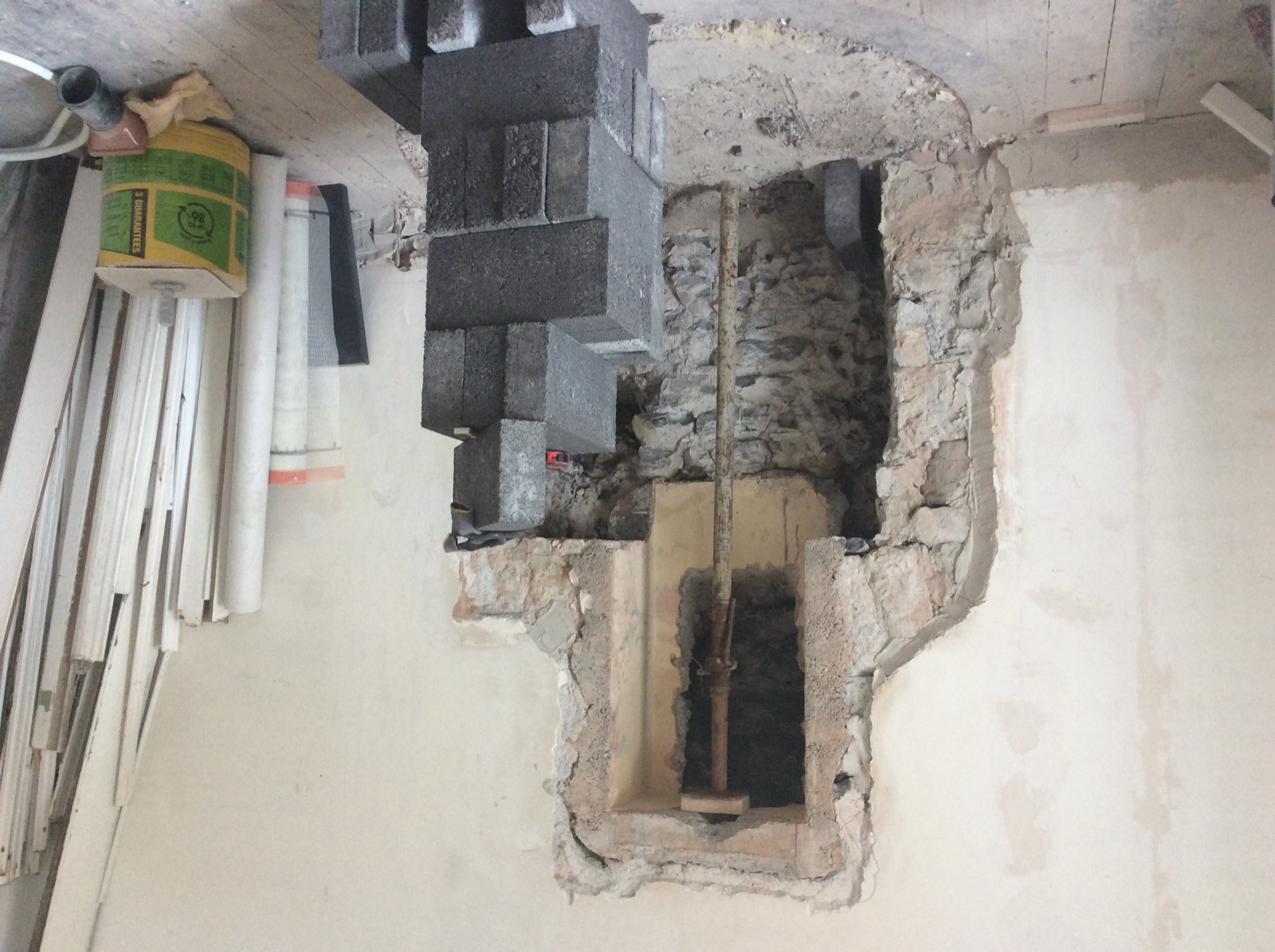
Reinstatement of dining room fireplace
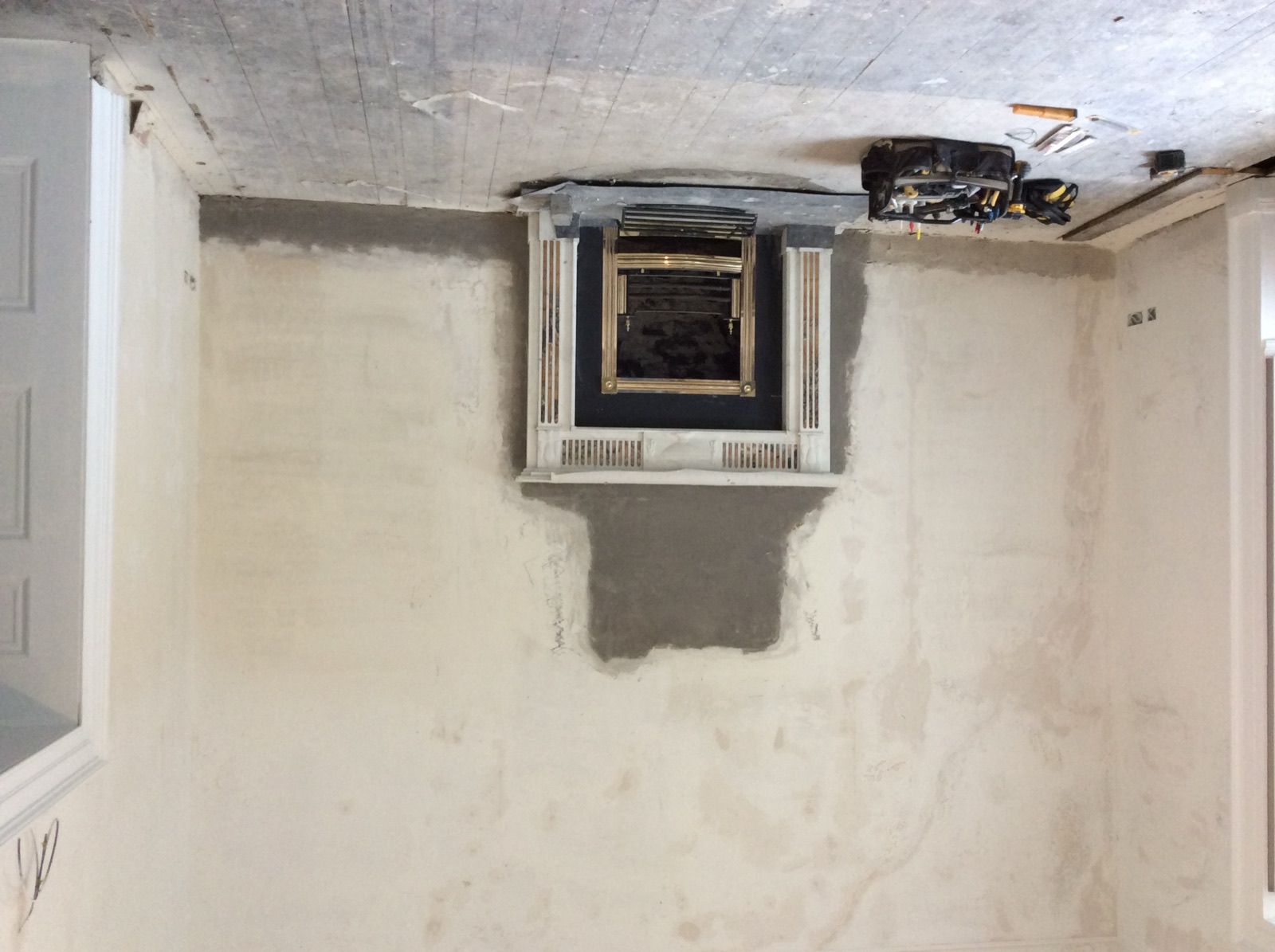
Fireplace and ceiling restoration
Make It Yours
Ballyglunin Park is available for weekly and multi-night stays throughout the year. Check availability and book through Airbnb.
Peak Season
Jun 1 – Aug 15 · Christmas/New Year · St. Patrick’s Day
Festival season, longest days, warmest weather. Highest demand — book early.
Regular Season
Apr – May · mid-Aug – Sep
Beautiful weather, slightly quieter. Spring flowers in April, golden light in September.
Off-Season
Oct – Mar
Cozy fires, crisp mornings. Ideal for smaller groups, writing retreats, or a quiet escape.
Questions? Email info@ballygluninpark.com